Reduce Business Phone Bill


Introduction: Telecom Bills Are Harder to Understand Than They Should Be
Most organizations review software contracts regularly — but rarely analyze their phone and internet invoices.
Unlike other services, telecom billing structures evolved over decades of legacy infrastructure, layered pricing models, and carrier add-ons. The result is a monthly bill that few teams fully understand.
Because of this complexity, businesses often continue paying for outdated services long after they’re needed.
Why Telecom Pricing Becomes Inefficient Over Time
Communication systems usually grow gradually. A company adds lines, locations, features, and backup circuits as it expands.
The problem is that services accumulate but rarely get removed.
Common situations include:
- Unused phone lines
- Redundant services
- Legacy hardware charges
- Carrier feature fees no longer required
Without periodic review, the bill reflects past needs instead of current operations.
The Most Common Hidden Charges Businesses Pay
1. Unused Lines
Organizations frequently retain inactive extensions or numbers after staffing changes or office consolidation.
2. Feature Add-Ons
Many traditional carriers charge separately for voicemail, call routing, and mobility features that modern platforms include by default.
3. Legacy Infrastructure Fees
Older PBX systems require maintenance contracts and hardware support costs even when minimally used.
4. Contract Rate Drift
Promotional pricing expires, but the service remains unchanged — increasing cost without increasing value.
5. Overprovisioned Internet Circuits
Bandwidth originally installed for peak growth often exceeds actual daily usage.
Why Businesses Don’t Notice the Problem
Telecom costs rarely trigger alerts because they are:
- Predictable
- Recurring
- Operationally necessary
Unlike variable expenses, they become background overhead. Teams assume the pricing is normal because it has always been there.
How Modern Communication Platforms Change Cost Structure
Newer communication platforms consolidate multiple services into a single system rather than billing them individually.
Instead of separate charges for:
- Phone lines
- Hardware maintenance
- Mobility access
- Call routing features
Organizations operate on a centralized communication platform managed through software.
This changes communication from infrastructure spending to service spending.
The Value of a Telecom Review
A structured telecom review compares:
- Current services
- Actual usage
- Required features
- Modern alternatives
The goal isn’t simply reducing cost — it’s aligning the service with operational needs.
Many organizations discover they are paying for reliability models designed for offices that no longer operate the same way.
Live Session: Bring Your Bill for Review
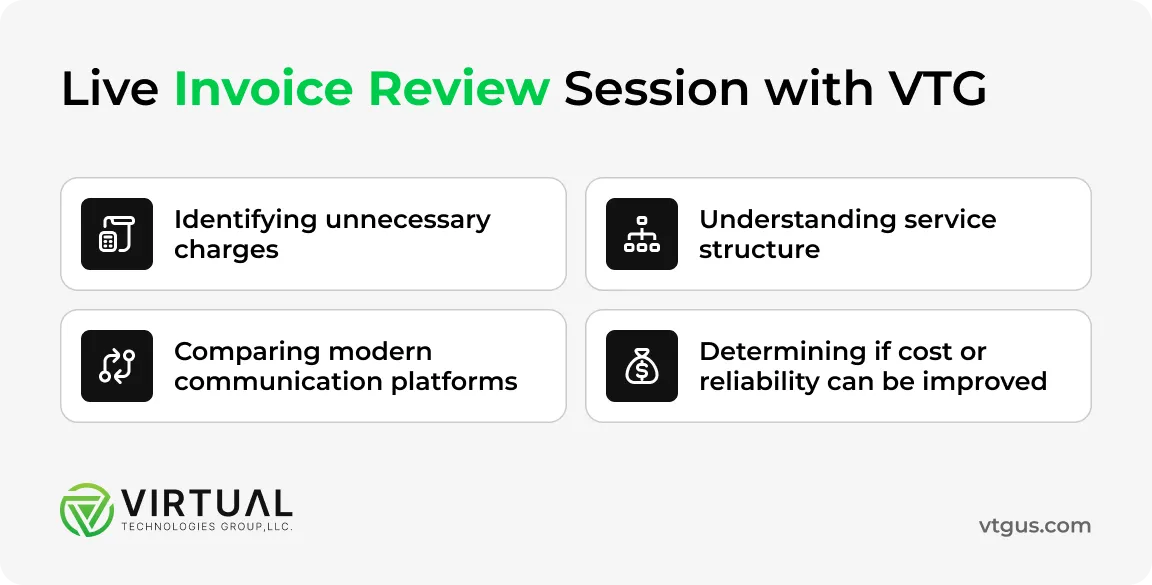
VTG is hosting a session where organizations can bring their current phone and internet invoices for evaluation.
👉 Subscribe to the webinar here
The discussion includes:
- Identifying unnecessary charges
- Understanding service structure
- Comparing modern communication platforms
- Determining if cost or reliability can be improved
No preparation is required — just the most recent bill.
Conclusion
Communication services evolve, but billing structures often lag behind. As organizations adopt hybrid operations and cloud infrastructure, legacy telecom pricing can remain unchanged for years.
A periodic review ensures communication systems match how businesses actually operate today rather than how they operated in the past.
Subscribe to our newsletter
Bring your skills, your passion, and your goals - we’ll provide the platform to thrive.

Stay Ahead with VTG Insights