Why Security Becomes an Operations Problem, Not Just an IT


Introduction: Security Used to Be an IT Responsibility
Historically, cybersecurity was viewed as a technical issue handled by internal IT teams.
Firewalls, antivirus software, and basic network protections were considered sufficient safeguards. As long as systems remained operational, security rarely entered executive discussions.
That environment has changed.
Today, cybersecurity directly affects operational continuity, financial risk, and organizational reputation.
Security is no longer just an IT concern, it has become a business infrastructure issue.
The Shift Toward Digital Operations
Most organizations now rely on interconnected digital systems for core operations:
- communication platforms
- customer management systems
- cloud infrastructure
- financial applications
- supply chain systems
When these systems are compromised, the disruption extends far beyond IT.
Operational processes stall, communication breaks down, and productivity declines across departments.
Cyber Incidents Disrupt Workflow
A security incident rarely affects only one system.
Because modern environments are integrated, a single compromised point can interrupt multiple operational functions.
Organizations often experience:
- halted workflows
- restricted access to internal systems
- delays in customer response
- temporary loss of operational visibility
Even short interruptions create cascading operational challenges.
The Financial Impact
Security incidents can quickly move from technical problems to financial liabilities.
Costs may include:
- operational downtime
- incident response services
- regulatory compliance requirements
- reputational damage
- client trust recovery
For organizations dependent on digital infrastructure, these risks are not theoretical, they are operational realities.
Why Internal IT Alone May Struggle
Many internal IT teams focus primarily on maintaining system functionality.
However, modern cybersecurity requires specialized expertise across multiple disciplines, including:
- threat monitoring
- vulnerability management
- compliance frameworks
- incident response planning
- security architecture design
Maintaining full coverage internally can be difficult as environments grow more complex.
Security as Operational Infrastructure
Organizations increasingly treat cybersecurity as a foundational operational system rather than an isolated technical tool.
This includes:
- continuous monitoring
- proactive risk assessment
- structured security frameworks
- integrated incident response planning
Security becomes embedded into daily operations instead of reacting only when problems occur.
Leadership Responsibility
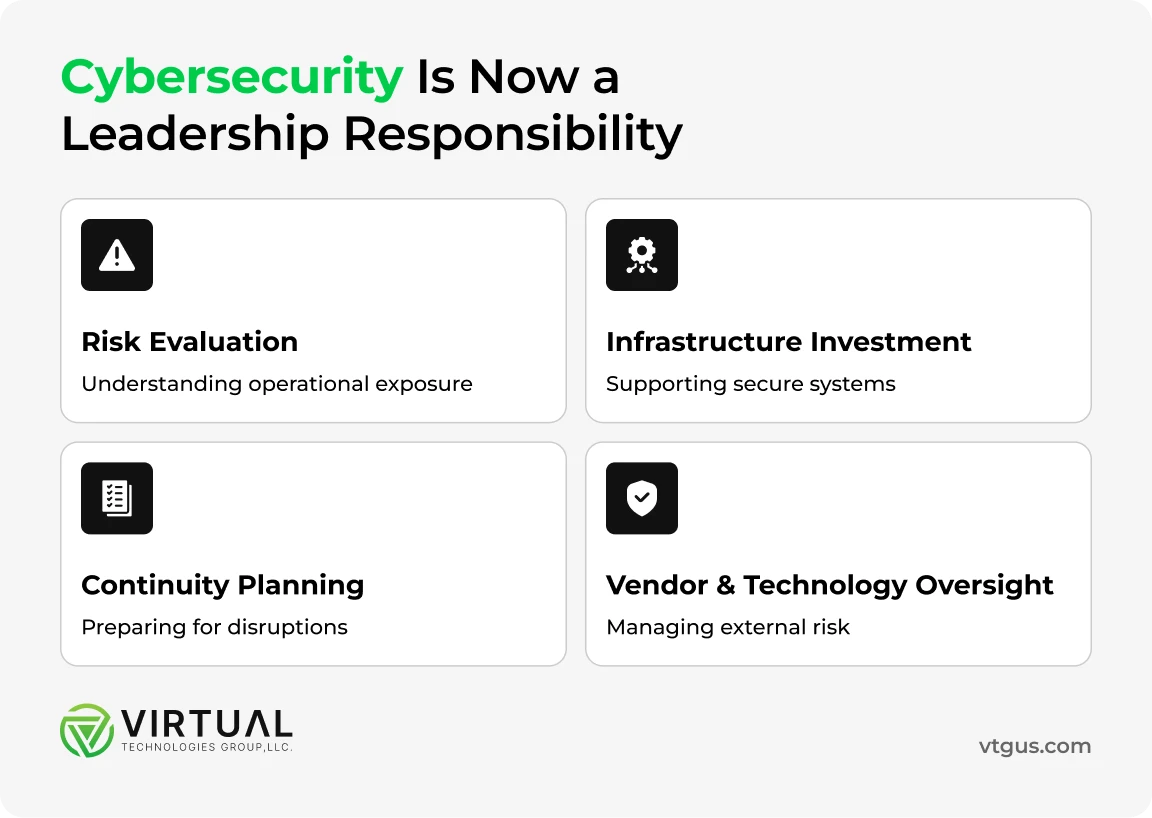
Because security incidents affect operations, leadership teams must now participate in cybersecurity strategy.
Executives are responsible for:
- risk evaluation
- infrastructure investment
- operational continuity planning
- vendor and technology oversight
Cybersecurity decisions now influence overall business resilience.
Building Operational Resilience
Organizations that treat cybersecurity as operational infrastructure often focus on:
- proactive monitoring
- structured security policies
- employee awareness training
- redundancy planning
- rapid response capability
The goal is not only preventing incidents but ensuring the organization can continue operating when threats emerge.
Conclusion
Cybersecurity has evolved from a technical safeguard into an operational necessity. As organizations depend more heavily on digital infrastructure, security decisions increasingly influence business continuity, productivity, and long-term resilience.
Companies that recognize this shift early position themselves to manage risk proactively rather than reacting after disruption occurs.
Subscribe to our newsletter
Bring your skills, your passion, and your goals - we’ll provide the platform to thrive.

Stay Ahead with VTG Insights