How IT Downtime Impacts Business Operations


Introduction: Downtime Isn’t Just an IT Problem
When systems go down, the immediate reaction is often to call IT.
But downtime is rarely just a technical issue.
It affects how a business operates, how teams communicate, and how work gets done. For growing organizations, even short periods of downtime can create ripple effects across multiple departments.
The Immediate Impact on Operations
When critical systems are unavailable, workflows slow or stop entirely.
Teams that rely on:
- CRM platforms
- Communication tools
- Cloud systems
- Internal software
are suddenly unable to perform their tasks efficiently.
Even brief disruptions can create delays that extend far beyond the initial outage.
Productivity Loss Across Teams
Downtime affects more than one department.
Sales teams may lose access to customer data. Operations may struggle to manage processes. Customer service teams may be unable to respond effectively.
As more systems become interconnected, downtime impacts multiple teams at once.
The Financial Cost of Downtime
The financial impact of downtime is often underestimated.
Costs can include:
- Lost productivity
- Delayed transactions
- Missed opportunities
- Customer dissatisfaction
For many organizations, the cost of downtime increases as the business grows and becomes more dependent on technology.
Customer Experience and Reputation
Downtime can also affect how customers perceive a business.
Delayed responses, interrupted services, or system outages can reduce trust and impact long-term relationships.
In competitive markets, reliability is often a key differentiator.
Why Downtime Happens
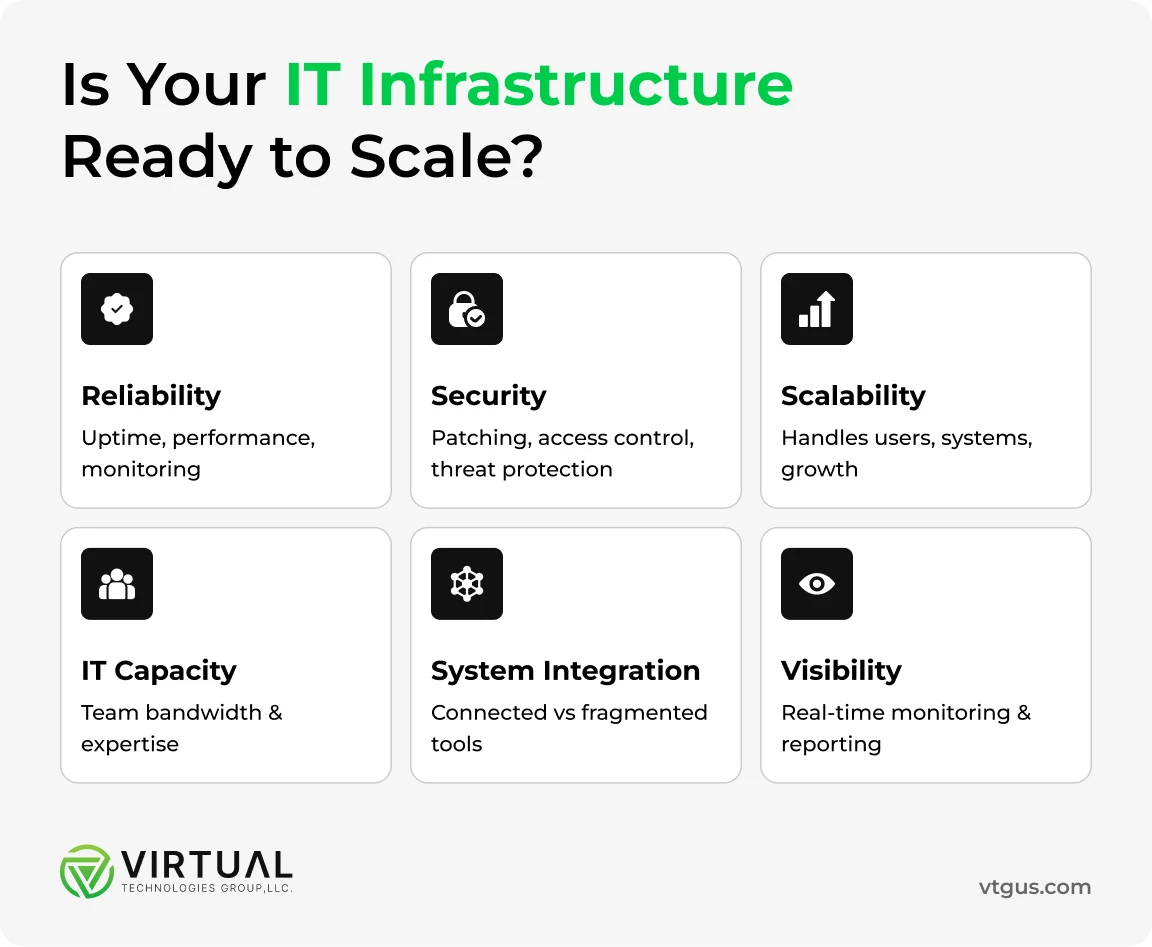
Common causes include:
- Outdated infrastructure
- Lack of monitoring
- Insufficient redundancy
- Delayed system updates
- Reactive IT management
These issues often build gradually and become more noticeable as organizations scale.
Preventing Downtime Through Proactive IT
Modern enterprise IT environments focus on preventing downtime before it occurs.
This includes:
- Continuous system monitoring
- Proactive maintenance
- Redundancy planning
- Automated alerts
- Structured response processes
By identifying issues early, organizations can reduce the likelihood of major disruptions.
Downtime as an Indicator of Infrastructure Gaps
Frequent or impactful downtime is often a sign that infrastructure needs to be evaluated.
Organizations experiencing regular disruptions may benefit from reviewing:
- System reliability
- Scalability
- Security posture
- Overall IT strategy
Conclusion
Downtime is more than a technical inconvenience—it is an operational issue that affects productivity, revenue, and customer experience.
Understanding its full impact helps organizations take a more proactive approach to IT and build systems that support consistent performance.
Reduce downtime and build a more reliable IT environment.
Subscribe to our newsletter
Bring your skills, your passion, and your goals - we’ll provide the platform to thrive.

Stay Ahead with VTG Insights