The Hidden Costs of Internal IT Teams Most Companies Miss


Why Internal IT Costs More Than Salaries
For many organizations, building an internal IT team seems like the most logical choice. Hiring dedicated staff provides control, institutional knowledge, and direct oversight.
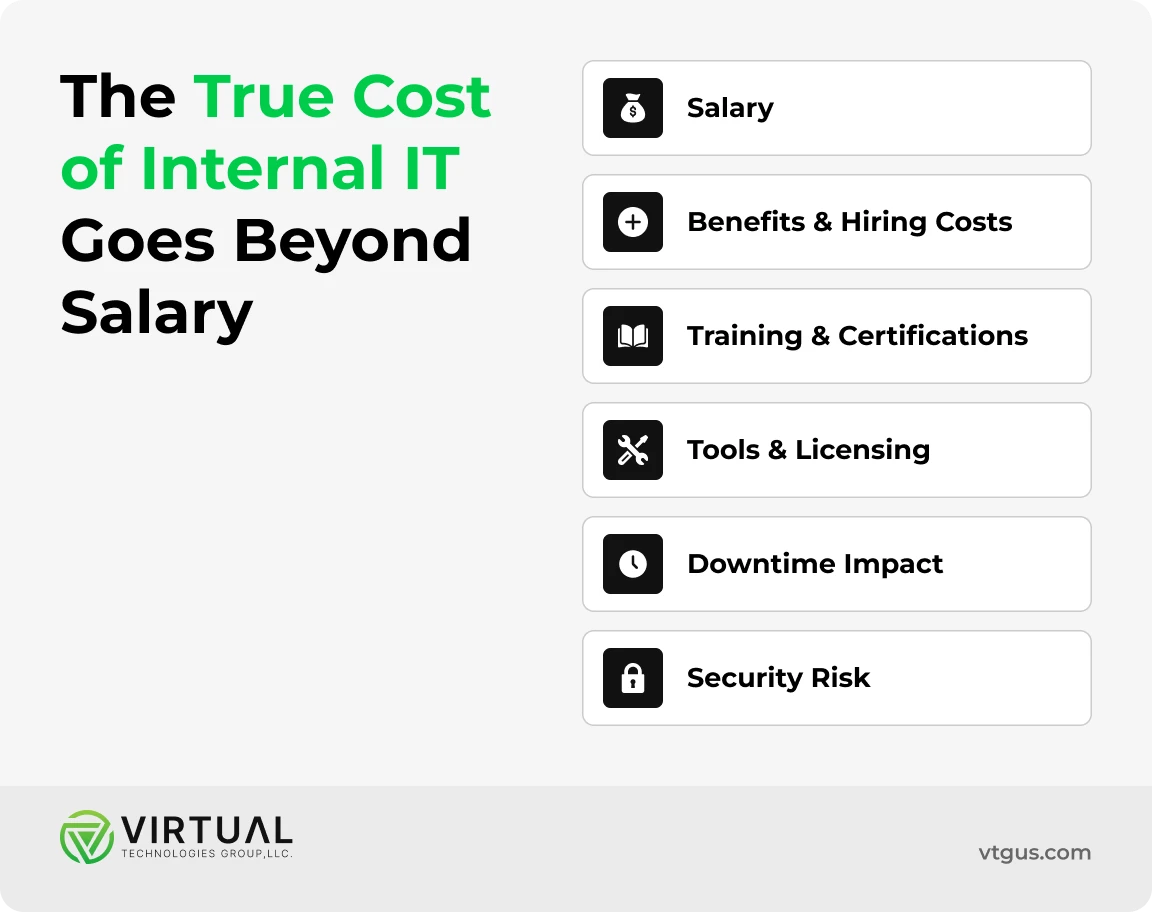
However, the true cost of internal IT goes far beyond salary. When organizations account for the full operational, financial, and risk profile, the economics often look very different.
Understanding these hidden costs is essential for leaders evaluating how to structure IT for long-term growth.
Staffing Costs Extend Beyond Payroll
A common misconception is that internal IT cost equals salary. In reality, total employment cost includes:
- recruitment and hiring expenses
- training and certifications
- benefits and taxes
- turnover and replacement costs
In highly technical roles, turnover can be especially expensive — not just financially, but operationally.
When a senior engineer leaves, the knowledge gap alone can impact projects, security posture, and system stability.
Specialized Skills Require More Than One Hire
Modern IT environments demand expertise across multiple domains:
- networking
- cloud infrastructure
- cybersecurity
- systems administration
- endpoint management
- compliance
Hiring one or two generalists rarely covers these areas effectively. This forces companies to either:
- hire additional specialized roles, or
- rely on third-party vendors anyway
Either path increases complexity and cost.
Tooling and Licensing Add Up Quickly
Enterprise IT requires a stack of tools to operate efficiently and securely:
- monitoring platforms
- security tools
- backup systems
- compliance solutions
- ticketing systems
- remote management tools
These tools often carry recurring license costs, implementation fees, and ongoing maintenance requirements.
Without proper management, organizations can end up overpaying or underutilizing software licenses.
Downtime Carries Real Business Impact
Downtime is rarely included in IT budget conversations, but it is one of the most expensive outcomes of under-resourced teams.
When systems go down, the impact can include:
- lost productivity
- revenue disruption
- customer experience issues
- reputational risk
For many organizations, even a few hours of downtime can cost more than a year of IT staffing.
Security Gaps Create Long-Term Risk
Cybersecurity is no longer optional. Modern organizations face growing risks from:
- ransomware
- phishing attacks
- data breaches
- compliance violations
Internal IT teams stretched thin often struggle to maintain:
- continuous monitoring
- timely patching
- security policy enforcement
- threat response
This exposes businesses to financial and legal risk that far outweighs the cost of preventive investment.
Scaling Internal Teams Is Difficult
As companies grow, IT demands increase rapidly:
- more users
- more devices
- more applications
- more infrastructure
Scaling internal teams to meet this demand is slow, expensive, and difficult in competitive labor markets.
In many cases, IT becomes a bottleneck to business growth rather than an enabler.
When to Reevaluate Your IT Model
Internal IT teams can work well for certain organizations, especially when supported by external partners.
However, if your business is experiencing:
- frequent downtime
- delayed projects
- growing security concerns
- rising IT costs
- hiring challenges
it may be time to reassess your approach.
Conclusion
Internal IT teams provide value, but the hidden costs can be significant. When accounting for staffing, tooling, risk, and scalability, many organizations find that hybrid or managed models provide better financial and operational outcomes.
Understanding the true cost of IT is the first step toward building a scalable, secure technology strategy.
Evaluate your current IT model and discover where hidden costs may be impacting your business.
Subscribe to our newsletter
Bring your skills, your passion, and your goals - we’ll provide the platform to thrive.

Stay Ahead with VTG Insights